
Stories
The Perfect Crime He Gambled Away

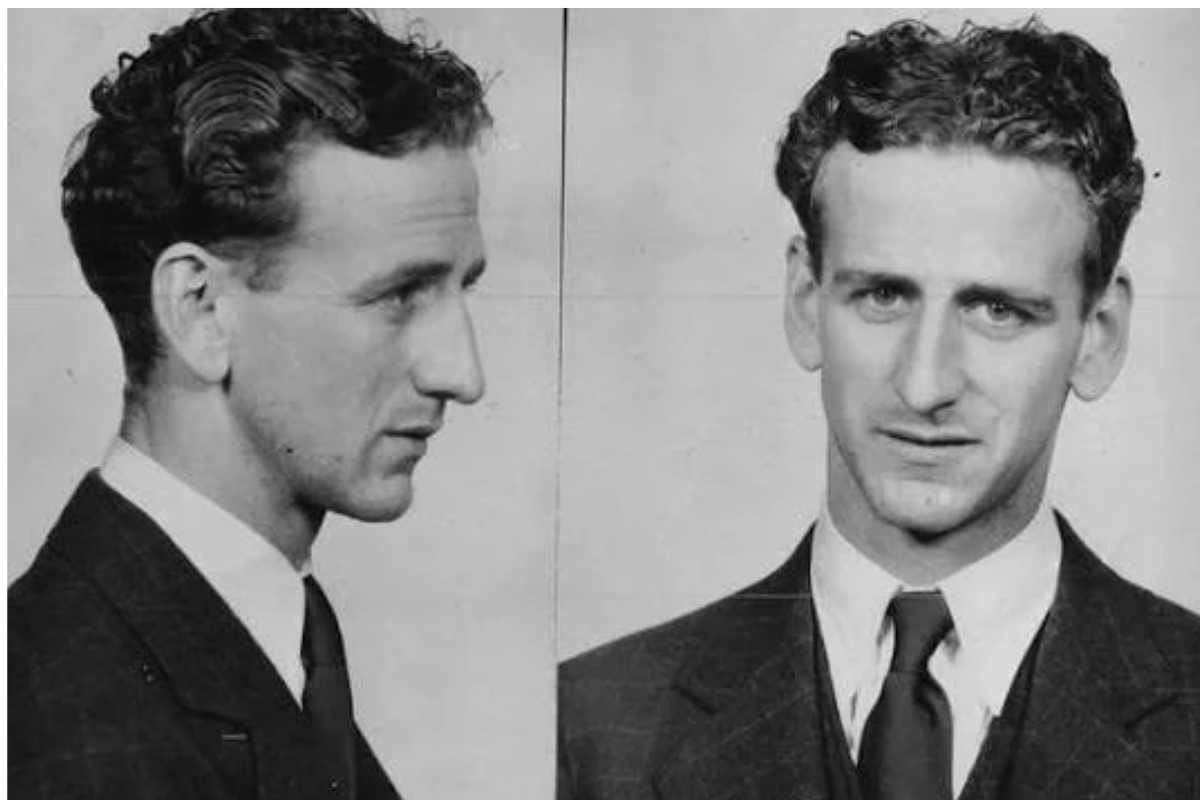
On the evening of Saturday, September 25, 1937, 72-year-old Charles Ross was driving his big sedan down North Avenue towards Chicago. Beside him sat Florence Freihage, his former secretary and lifelong friend. Ross was the retired president of the George S. Carrington greeting card company, a man comfortable enough to be worth a ransom.
A car had been following them for some time, its headlights unusually bright. Ross sounded alarmed. He pulled to the side to let it pass.
The car swerved in front and blocked the road.
A young man with curly hair and a pointed face jumped out with a revolver and tapped it against the driver’s window. Ross opened the door. “This is a kidnapping,” the gunman announced. He took $85 from Miss Freihage’s purse, ordered her to lie on the floor of the car, and told her that if she called the police, they would kill Ross.
The gunman was John Henry Seadlund, 27. At the wheel of the getaway car was his partner, James Atwood Gray, about 20. Together they drove Ross north into the darkness. Miss Freihage waited until they were gone, then raced to the nearest telephone.
Seadlund would later boast that it was a perfect crime.
A dugout in the Minnesota woods
The kidnappers crossed Wisconsin into Minnesota and reached a hideout near Emily. Out in the woods, they had dug a cold, dark pit and lined it with wood. This was where they kept Ross.
Seadlund began dictating ransom letters, and Ross was forced to write them. When Seadlund asked for the amount, the old man named a figure of $5,000. Seadlund studied the page, changed the number to $50,000, and mailed it.
Over the next few days he sent four ransom letters from Chicago, each one tightening the plan. The instructions were elaborate. The family was to hire a motorcycle rider from a Harley-Davidson dealer, dressed in white, to carry the money in a small leather bag along a route of about 395 miles. At a signal, either a flash of headlights or a gunshot, the rider was to drop the bag and walk away. Seadlund even placed coded ads in the Chicago newspapers to confirm the family’s compliance.
To prove Ross was alive, Seadlund photographed him holding a Chicago newspaper dated October 2, and he left the film at a camera shop for the family’s contact to collect. The letters were signed “Albie” or “not Brady,” and one mocked the FBI as too much “vitamin G.” He was having fun.
The payoff
The family followed every instruction. On October 8, a motorcycle rider left Oak Park, Illinois, at 6 p.m. At 7:50 p.m., about six miles east of Rockford, headlights flashed behind him. He threw the bag of $50,000 off the road, ditched his motorcycle 300 yards on, and walked away, exactly as ordered.
Seadlund collected the money and drove back to the dugout in Minnesota. He split the cash: $30,000 for himself, $20,000 for Gray.
Charles Ross was never released.
No honor among thieves
On October 10, the two kidnappers took Ross to a second hideout, a pit about 17 miles northwest of Spooner, Wisconsin. What happened there is known mainly from Seadlund’s own confession. He claimed he believed Gray was about to attack him, a struggle began, and all three fell into the pit. By his account, he shot Gray, and then shot Ross to make sure there would be no witness.
The FBI saw it differently. Gray appeared to have been killed to avoid splitting the ransom, and Ross was eliminated because he could identify them. Seadlund covered the pit with dirt and brush and drove away alone, with the $50,000 now entirely his.
He buried most of it in a typewriter case near Walker, Minnesota, the same typewriter he had used for the last three ransom letters, and then began to run.
Following the money
On October 19, with Ross still missing, the FBI sent out a list of the ransom bills’ serial numbers to banks and businesses across the country, asking everyone to watch for them. This would turn out to be the case’s most important decision.
Bills began to surface in scattered places. Meanwhile, Seadlund crisscrossed America with a wire-haired terrier he had bought in Denver. His route took him through Spokane, Chicago, New York, Philadelphia, Miami and New Orleans, and he spent the ransom as he went. Each time a marked bill turned up, agents investigated, and the trail inched closer.
In early January 1938, ransom bills were identified at the Federal Reserve Bank and the Bank of America in Los Angeles. FBI Director J. Edgar Hoover flew in to direct the investigation personally. Agents traced the money to a place where a man with cash and a taste for risk could spend it freely: the Santa Anita race track.
The trap at the betting window
Seadlund’s fatal weakness was gambling. In Los Angeles, he spent days at the track, and the FBI built a trap around him.
At Santa Anita, about 500 ticket sellers and 500 cashiers handled between $400,000 and a million dollars a day. With the cooperation of the track, agents took positions behind the betting windows as cashiers, checking each suspicious bill against the ransom list. Other agents waited nearby for a signal.
On January 14, 1938, a man stepped up and asked for a ticket on a horse in the third race. He paid with a bill, and the agent behind the counter recognized the number.
Agents moved in quietly. They found $14,512 on and around the man, $5,620 of it ransom money. He gave his name as Peter Anders, the false identity he had used for years. He calmly denied everything and claimed he had bought the money cheaply from bank robbers.
Then Hoover questioned him himself, and Seadlund broke. He gave a 28-page signed confession covering his entire criminal career, the kidnapping, and both killings.
The search for the dead
Three days later, agents flew Seadlund to Minnesota and took him into the snow-covered north woods. He led them to markers only he knew, including a road sign pierced by bullet holes. Beneath a small pile of snow in a clump of trees, they dug up a typewriter case holding $32,645.
They continued by horse-drawn sled to the first dugout near Emily, then on to the second near Spooner. In the underground chamber, they found the bodies of Gray and Ross.
Standing there, Seadlund suddenly tried to escape. He swung his handcuffs down over the head of the agent he was chained to, and the two fell into the snow. Other agents subdued him quickly, and Seadlund apologized.
Justice, fast
Seadlund had started small. As a teenager in Minnesota’s iron country, he was a skilled hunter who obeyed the legal duck limit and gave the extras to neighbors. When the Depression closed the mines, he drifted into crime, meeting a gangster from the Dillinger circle in the woods in 1934. He went from stealing cars to robbing banks to kidnapping. He had even considered snatching baseball star Dizzy Dean. His partner Gray, whom he had picked up as a hitchhiker in Montana, became his last victim but one.
His path to the electric chair took less than six months from arrest:
- February 28, 1938: Seadlund pleaded guilty to kidnapping.
- March 16, 1938: A jury recommended the death penalty.
- March 19, 1938: The judge sentenced him to death. His lawyers appealed, and the appeals court upheld the sentence.
- July 14, 1938: Seadlund was executed in Chicago, 13 days before his 28th birthday.
He was buried in Ironton, Minnesota, beside his father.
What the case leaves behind
Seadlund’s plan really was clever. It had coded ads, dictated letters, a motorcycle courier and a photograph as proof of life. Nothing in it failed. What destroyed him was the part he could not control: a list of serial numbers, and a man who could not stay away from a betting window.
The FBI’s final judgment was blunt. His uncontrollable desire to gamble led to his detection, and the perfect crime was undone by a bet.
Sources: FBI historical case file, “Charles Ross Kidnapping.” The file contains small inconsistencies in dates and dollar figures (for example, the abduction is given as September 25 and 26, the arrest as January 10 and 14, and the buried cash as $32,625 and $32,645). This story uses the most detailed figures from the narrative sections. Verify any detail you plan to quote.

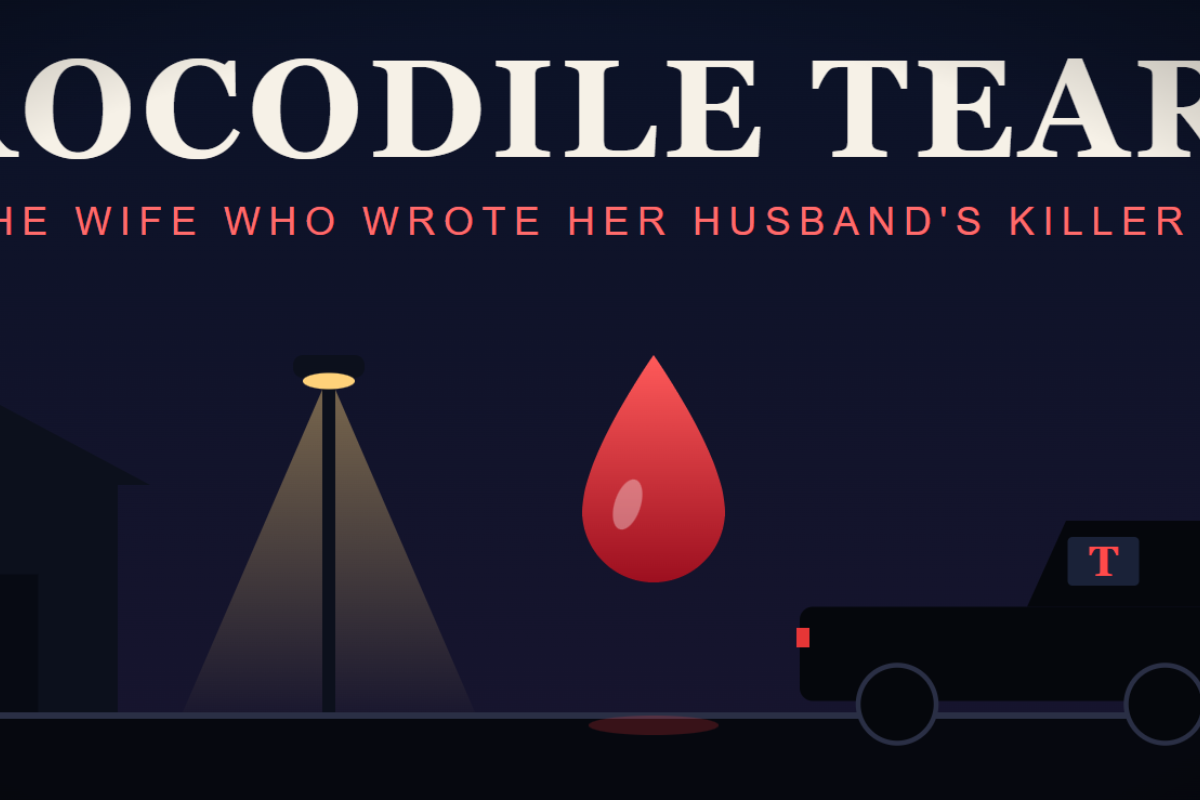
True crime. Based on the public record: a U.S. Attorney’s Office press release, court filings and trial coverage.
A dog walk that ended in gunfire
On the evening of October 9, 2020, Jamie Faith, a 49-year-old technology director at American Airlines, stepped out of his home in Oak Cliff, Dallas, with his wife Jennifer and their dog.
They had been walking for about a minute when a man opened fire. Jamie was shot seven times and died at the scene.
Jennifer told Dallas homicide detective Chris Walton what she had seen. A stranger, she said, had shot and kept shooting. He had dark eyes, he came toward her, and he tackled her to the ground. Audio from the scene captured her screaming. Video afterwards showed her crying hysterically. She looked, to everyone who saw her, like a woman whose life had just been destroyed.
She was not a witness. She was the author of the plan.
The love story behind the murder
To understand how Jamie Faith died, you have to go back seven months before the shooting, to the reappearance of an old flame.
Darrin Ruben Lopez was Jennifer’s high school sweetheart. He had gone on to serve in the U.S. Army, including in Iraq, where he suffered a traumatic brain injury that left him disabled. By 2020 he was living in Cumberland Furnace, Tennessee, hundreds of miles from Dallas. He and Jennifer began a long-distance relationship, and she would later call him her “one and only love.”
Then the emails started.
Jennifer created two fake email accounts. Through the first, she pretended to be her own husband. Through the second, she pretended to be one of her friends, a man named Rob. Using those identities, she told Darrin a terrible story: that Jamie was physically and sexually abusing her.
None of it was true. Jennifer would later stipulate in her plea papers that no abuse ever happened. To make the lie convincing, she downloaded stock photographs of injuries from the internet and attached them to the messages as evidence.
According to trial coverage, the fake accounts were created in April 2020. She closed them in early September, about a month before the murder. By then, they had done their job.
The drive to Dallas
On October 8, Darrin Lopez decided to act. By his own later testimony, he believed he was protecting the woman he loved. He drove from Tennessee to Dallas, waited near the Faiths’ home, and ambushed Jamie as the couple walked their dog. Afterwards, he fled in a black Nissan Titan pickup with a distinctive “T” decal on its rear window.
Police did not know who he was. But Jennifer was already thinking about the truck.
The performance
When investigators began looking for the pickup, Jennifer went on television. She appeared on Dallas-Fort Worth’s ABC affiliate, WFAA, and pleaded with the public to help find the truck with the decal.
Then she picked up her phone and texted Darrin. She told him she had woken up in a panic, and that he needed to get the sticker off the back window of his truck as soon as possible. He removed it the next day.
Putting herself in front of the cameras while quietly warning the killer was only part of the performance. Money was part of it too.
- She had been sending Darrin money and gifts before and after the murder. She even gave him two credit cards and paid them off with money raised by a “Support Jennifer Faith” GoFundMe campaign, set up by people who sincerely believed she was a grieving widow.
- About a month after Jamie’s death, she filed a claim with MetLife for roughly $629,000 in death benefits from his employer. She kept Darrin updated on the claim, and the two discussed using the money to get a home in her name in Tennessee.
The cover-up cracks
By January 2021, investigators wanted to talk to Jennifer again. Rather than panic, she coordinated. She contacted Darrin to line up their stories. On January 10, she sent him a message telling him not to text her the following Monday, because she planned to delete her texts and factory reset her phone.
It was too late. Federal agents from the ATF arrested Darrin the very next day, January 11, in Cumberland Furnace. The gun used to kill Jamie Faith was found inside his home. Ballistics later matched bullet fragments and casings to it.
Jennifer was not yet in custody, but she was still trying to hold the story together. On February 2, 2021, she asked a third party to pass a message to Darrin in jail. In it, she said she would always be with him, and that she had to be careful because every communication was being monitored.
She was right about the monitoring. She was charged shortly afterwards, first with obstruction of justice and later with using interstate commerce in a murder-for-hire, a crime that can carry the death penalty. Even after her arrest, she kept up the fiction. In a handwritten note to Darrin in October 2021, she insisted she had never sent him emails from any account except her own.
Two verdicts
In February 2022, Jennifer Faith pleaded guilty. In exchange, prosecutors dropped the obstruction charge and agreed to recommend life in prison.
On June 21, 2022, U.S. District Judge Jane Boyle sentenced her to exactly that. She also ordered a $250,000 fine and $6,500 in restitution to Jamie’s family for funeral costs. During the hearing, prosecutors played the video of Jennifer describing the shooting to detectives. The judge called her “pure evil.” The U.S. Attorney, Chad Meacham, said she had put on a performance with crocodile tears, and that those tears had not stopped the federal investigators.
Darrin Lopez, who had pleaded not guilty, went on trial in a Dallas County court in July 2023. On the stand, he told jurors he had been outraged to learn that the emails and texts supposedly from Jamie and from Rob had actually been written by Jennifer, and that he had truly believed he was protecting her. He expressed remorse for killing an innocent man.
The jury was not persuaded that this excused anything. They found him guilty of murder after about an hour and fifteen minutes of deliberation. After a longer penalty phase, they sentenced him to 62 years in prison and a $10,000 fine. His attorney said he planned to appeal.
What the case leaves behind
Most murder stories begin with a killer and end with a victim. This one began with a lie, and the lie was the weapon. A woman manufactured a villain who did not exist, and handed her old love a mission and a gun’s worth of motive. A man with a brain injury became the instrument. And a good man, out walking his dog, paid with his life.
Both people responsible are now in prison.
Sources: U.S. Attorney’s Office, Northern District of Texas press release (June 21, 2022); Court TV, CBS Texas, Fox 4, WFAA and NBC DFW trial coverage. Details are as reported publicly; Lopez’s appeal status may have changed since publication.
-
 Net worth1 month ago
Gareth Bale Net Worth
-

 Net worth1 month ago
Beyonce Net Worth
-
 Net worth1 month ago
Gabriel Iglesias Net Worth
- Net worth4 weeks ago
Matt Rife Net Worth
-
 Stories2 weeks ago
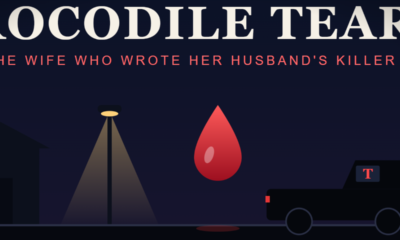
Crocodile Tears: The Wife Who Wrote Her Husband’s Killer
-

 sports2 weeks ago
The Next Generation of Aviator-Style Games Is Giving Players More Control
-

 sports1 week ago
The shift from desktop-first to mobile-first casino platforms explained
-

 sports1 week ago
Why Social Interaction Is the Real Future of Live Casino Gaming